
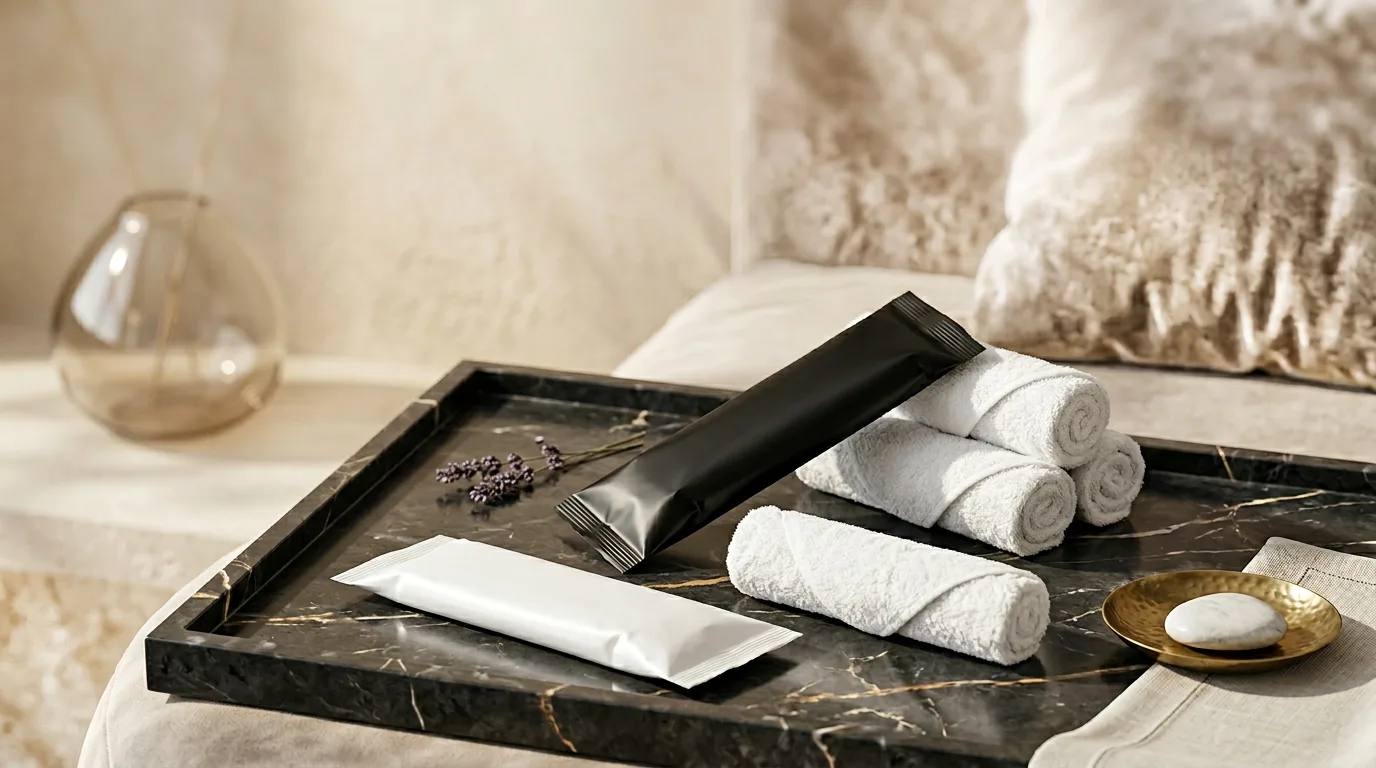
Tenugui vs oshibori comparison, a flat woven Japanese cotton tenugui cloth next to a warm folded premium oshibori towel on a serving tray

    Guide

    Tenugui vs Oshibori

    Two Japanese hand towels, two very different rituals. Here is how to tell them apart and choose the right one.

    The short answer

    One is a cloth, the other is a ritual

    A tenugui is a thin, flat-woven cotton cloth. It has been part of daily Japanese life for centuries, used in bathhouses, kitchens, festivals and as a decorative wrap. You use it dry.

    An oshibori is a small towel offered warm or chilled and slightly moist, presented to guests before a meal, on arrival at a hotel, during a spa treatment or before boarding a flight. It is the physical form of Japanese hospitality.

    Both are called Japanese hand towels in English, but they solve different problems. If you are exploring Japanese textiles or looking to bring authentic hospitality into your business or home, this guide will help you choose.

    Tenugui

    Tenugui, the everyday Japanese cotton cloth

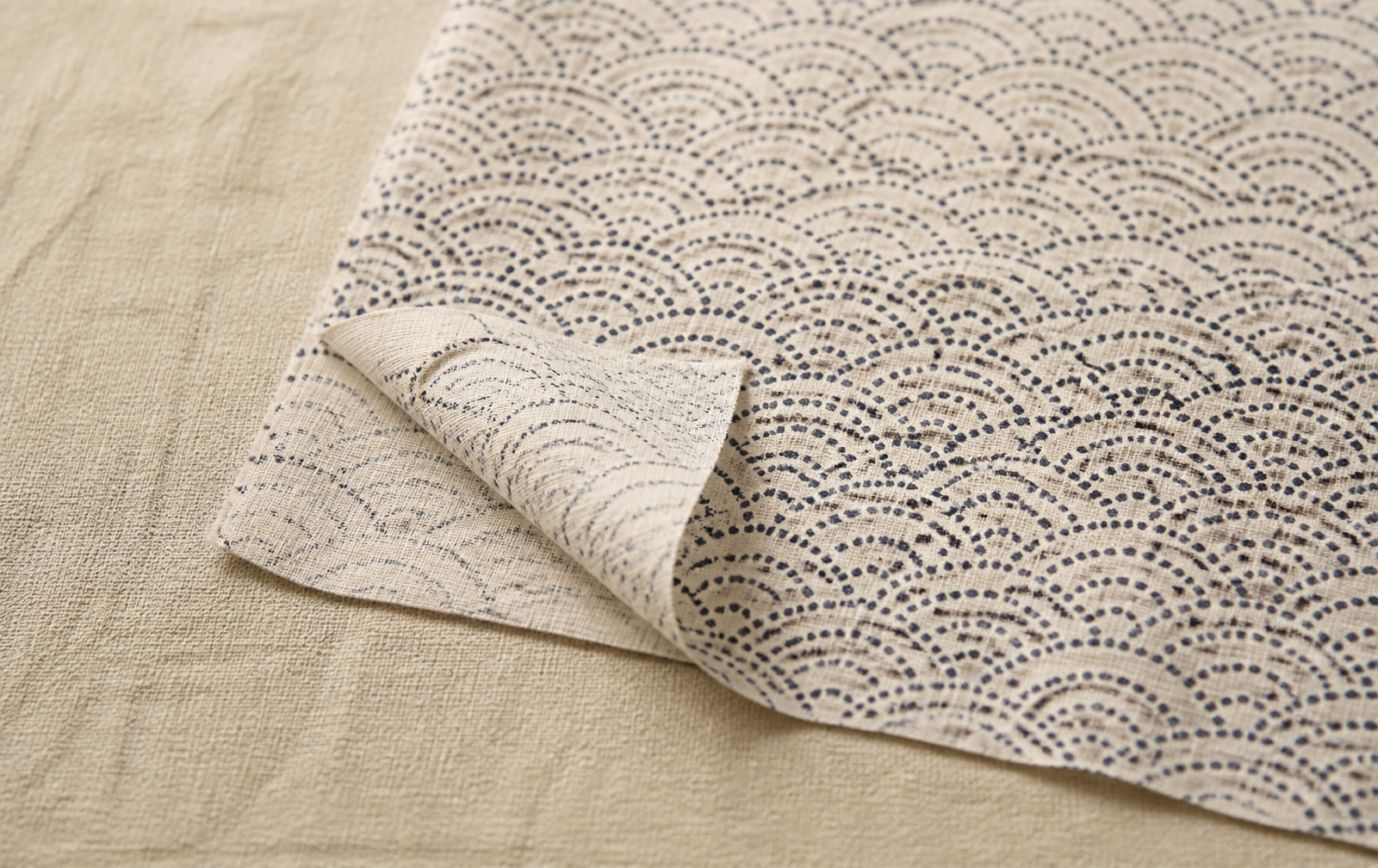
    Traditional Japanese tenugui, a flat plain-weave cotton hand cloth with indigo seigaiha wave pattern, one corner folded to show the thin single-layer weave
    A tenugui is flat, thin and unhemmed, printed with traditional patterns like the seigaiha wave.

    What a tenugui is made of

    Tenugui are thin rectangles of plain-weave cotton, usually around 35 by 90 centimeters. The short ends are left unhemmed so the cloth dries quickly and never grows heavy with moisture.

    How tenugui is used in daily Japanese life

    Historically they were used as head coverings for craftsmen, sweat cloths in the bath, wrapping for gifts and bento, and simple kitchen towels. Today they also appear as wall art, framed prints and printed souvenirs.

    Why a tenugui is not an oshibori

    A tenugui is beautiful and useful, but it is not designed to hold warmth or moisture. It is not the cloth you serve to a guest before a meal.

    For your home

    Discover our oshibori collection

    If you love Japanese textiles, our premium oshibori bring the same craft into a warm hospitality ritual at home.

    Shop the collection

    For your business

    Wholesale and custom orders

    Sourcing branded oshibori for a restaurant, hotel or spa? Our team helps you build the right program.

    Contact our team

    Oshibori

    Oshibori, the Japanese hospitality hand towel

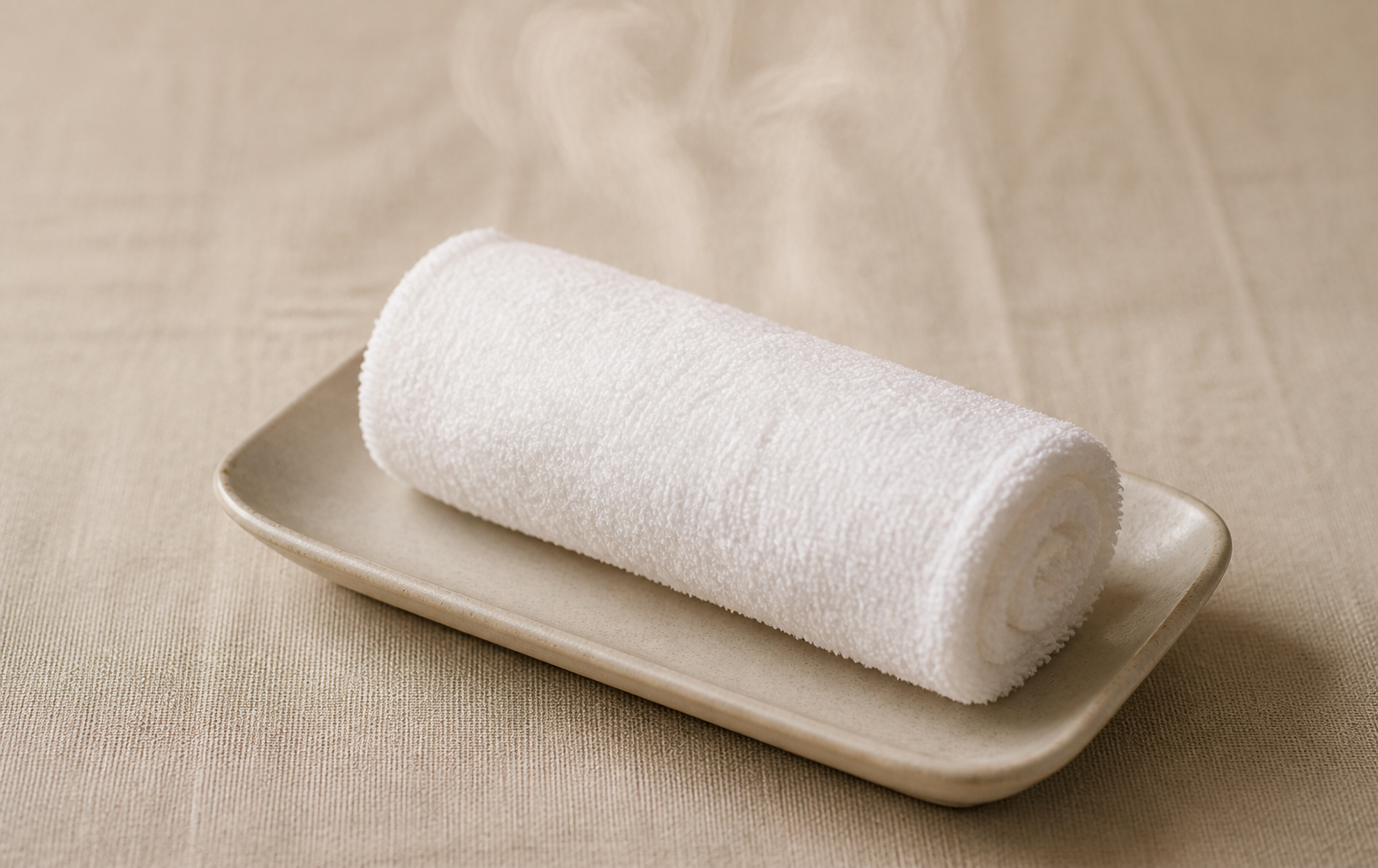
    Premium white oshibori hand towel rolled on a ceramic tray with soft steam rising, served warm as a Japanese hospitality welcome
    A premium oshibori is rolled, warmed and served on a tray as the first gesture of welcome.

    The meaning behind the word oshibori

    The word oshibori comes from shiboru, meaning to wring. It refers to the small, moist towel handed to a guest as a first gesture of welcome. Warm in cooler months, chilled in summer, always fresh.

    Cotton and microfiber oshibori towels

    Traditional oshibori are woven from soft cotton. Modern premium oshibori are also made in organic microfiber, which holds temperature and light fragrance well and stays soft through repeated use in high-volume hospitality settings.

    Learn more about oshibori towels

    You can read more in our guide to oshibori or see how it is served in our how to use guide.

    For home

    Bring the ritual home

    Shop premium cotton and organic microfiber oshibori in Black and White packaging, ready to warm and serve.

    Shop oshibori

    For hospitality

    Restaurants, hotels, spas and aviation

    Custom branded oshibori, volume pricing and dedicated support for your service program.

    Request a quote

    Side by side

    Tenugui vs oshibori at a glance

    Format

    Tenugui

    Flat rectangular cloth, roughly 35 x 90 cm, unhemmed short ends.

    Oshibori

    Small folded or rolled towel, served warm or chilled, sealed until use.

    The tenugui is cut flat so it dries quickly and lies neatly when folded or wrapped. The oshibori is proportioned for the hands, presented on a tray or in a warmer, ready for the guest.

    Weave and texture

    Tenugui

    Thin plain-weave cotton, single layer, slightly crisp hand feel.

    Oshibori

    Dense woven cotton or organic microfiber, soft and pliant against the skin.

    Tenugui feels light and papery, which is part of its charm. A premium oshibori feels plush and cushioned, closer to a spa towel than a napkin.

    Absorbency

    Tenugui

    Low to moderate. Absorbs quickly on the surface, then releases moisture just as fast.

    Oshibori

    High. Holds warm or chilled water evenly and stays moist through the full service.

    Tenugui is designed to shed water so it can be reused within minutes. Oshibori is engineered to carry moisture and temperature from the warmer to the guest without dripping or cooling too fast.

    Use

    Tenugui

    Dry. Wrapping, drying, headwear, decoration, gifting.

    Oshibori

    Moist. Cleansing the hands before a meal, refreshing during a treatment or flight.

    You reach for a tenugui the way you would a linen tea towel or a bandana. You reach for an oshibori the way you would a warm compress, as a small moment of care.

    Ritual

    Tenugui

    Everyday utility and craft, festival, kitchen and bathhouse tradition.

    Oshibori

    Formal hospitality gesture in restaurants, hotels, spas, airlines and yachts.

    Tenugui belongs to daily life and folk craft. Oshibori belongs to the welcome ritual, the first physical gesture a guest receives when they sit down.

    Temperature

    Tenugui

    Ambient, used at room temperature.

    Oshibori

    Warm in cool months, chilled in summer, always sealed until it is opened.

    Temperature is central to the oshibori experience. A warm towel signals comfort and slows the pace of the meal, a chilled towel refreshes on a hot day.

    Best use cases

    Tenugui

    Home kitchens, styling and interiors, gift wrapping, souvenirs, uniforms.

    Oshibori

    Restaurants, hotels, spas and wellness, aviation and yachts, considered self care at home.

    Choose tenugui when you want a beautiful dry cloth with a Japanese sensibility. Choose oshibori when you want to serve a warm or chilled moist towel as part of a real hospitality moment.

    Which one to choose

    Pick the towel that matches the moment

    Choose tenugui if

    • You want a dry cotton cloth for the kitchen, styling or gifting
    • You collect Japanese textiles and printed patterns
    • You need a light wrap for bento, bottles or small gifts

    Choose oshibori if

    • You run a restaurant, hotel, spa, yacht or airline and want a real welcome ritual
    • You want a warm or chilled moist towel served before the meal
    • You want a considered self-care moment at home

    Our collection

    Premium oshibori, designed in the USA

    Organic cotton or microfiber, in Black and White packaging. Made for hospitality and home.

    FAQ

    Common questions